Investment Implications of the World’s First HBM Thematic ETF Listing in Korea
By 2027, the semiconductor ETF industry will be less about “chips” in the abstract and more about the specific machinery behind AI: storage and computing power. The capital markets are already shifting in that direction, carving out ETFs and index derivatives that track not only general semiconductors, but the precise hardware bottlenecks for AI workloads—HBM memory stacks, accelerator compute, advanced interconnects, and cooling infrastructure. The result will be a landscape where product innovation and investor behavior evolve together, reshaping what it means to invest in “semis.”

The traditional sector ETF that simply holds a basket of chip companies will still exist in 2027, but it will sit beside more focused instruments: AI storage ETFs, computing power ETFs, and derivatives that let investors express views on specific AI hardware indices. Investors will use these tools both strategically and tactically. Some will treat them as core allocations to the AI infrastructure theme; others will treat them as levered expressions of short-term demand for memory, bandwidth, and FLOPS. Understanding this evolution is critical for anyone thinking about where the semi ETF industry is heading.
From Generic Semis to AI Infrastructure Slices
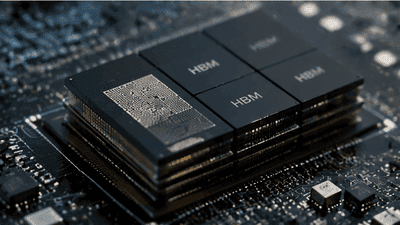
The first phase of semiconductor ETF growth was simple: track major semi indices, overweight the biggest names, and treat the sector as a single theme. AI changed that. As large models and inference workloads exploded, two hardware bottlenecks became central: storage (especially high-bandwidth memory and fast non-volatile storage) and computing power (GPUs, accelerators, custom AI chips, and supporting interconnect). ETF product design began to follow those bottlenecks.
By 2027, expect more ETFs explicitly marketed as “AI storage” and “AI compute” products. AI storage ETFs will focus on HBM, DRAM, NAND, and related memory suppliers, along with select equipment and materials firms that serve these segments. AI computing power ETFs will focus on GPU and accelerator designers, AI-focused CPU and ASIC producers, and possibly key networking and switch companies that enable large-scale compute clusters.
This slicing of the semiconductor universe will be part of the natural product innovation trajectory: the market moves from broad exposure to targeted stacks as investor demand becomes more sophisticated and bottlenecks more clearly defined.
Index Derivatives: Trading AI Hardware Risk Directly
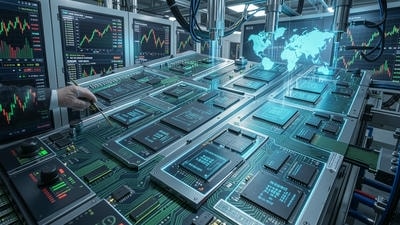
Alongside ETFs, index derivatives on AI storage and computing power baskets will become more common by 2027. Futures and options on AI memory indices, AI compute indices, and broader AI infrastructure indices will allow institutional and advanced retail investors to trade and hedge the hardware side of AI without picking individual names.
These derivatives will cater to several needs:
- Risk management: Data-center operators, cloud providers, and hyperscalers may use index derivatives to hedge price exposure to key hardware inputs.
- Tactical trading: Macro and thematic traders will use options and futures to express short-term views on AI hardware demand, capex cycles, and regulation.
- Structured products: Banks and asset managers will build notes, autocallables, and other structures linked to AI storage and compute indices.
The presence of liquid index derivatives will, in turn, influence ETF design. Some AI storage and compute ETFs may be used as hedging or arbitrage vehicles against these derivatives, tightening the linkage between products and underlying indices.
Product Innovation: Smart Beta AI Hardware
Smart beta approaches will not be confined to broad semi funds. By 2027, expect smart beta AI storage and compute ETFs that apply factor tilts to hardware subsectors. Equal-weight AI compute ETFs could reduce dependence on one dominant GPU maker. Quality-focused AI storage ETFs may try to emphasize memory companies with better balance sheets and sustainable capex plans.
Factor-driven AI hardware products will likely explore:
- Size diversification: balancing mega-cap leaders with mid-cap suppliers.
- Quality and profitability: tilting toward firms with strong margins amidst intense competition.
- Volatility control: reducing exposure to the most unstable names while still capturing theme growth.
These smart beta structures will be a response to investor concern about concentration and cyclicality. AI hardware winners can become extremely large and volatile; smart beta will aim to refine exposure without abandoning the theme.
Risk-Managed and Options-Overlay Products
Volatility in AI hardware—particularly memory and GPUs—makes risk-managed products and options-overlay ETFs naturally appealing. Covered-call AI compute ETFs, volatility-targeted AI storage products, and buffered outcome structures linked to AI hardware indices will be part of the 2027 product mix.
Covered-call structures can offer higher income from call premiums at the cost of capped upside, which some investors may accept in exchange for smoother returns from a volatile theme. Buffered or defined-outcome products can offer partial downside protection while still allowing participation in AI hardware appreciation.
These innovations reflect a broader trend: investors want to own AI storage and computing power as long-term themes, but they do not want to experience every cycle and correction in full. Risk-managed semi ETFs will serve that demand.
Investor Behavior: From Stock Picking to Theme Picking
By 2027, investor behavior around AI hardware is likely to shift further from stock picking to theme picking. The complexity of the semiconductor value chain, the speed of technological change, and the global nature of supply chains make it difficult for many investors to maintain single-stock exposure across AI storage and compute names.
Instead, semi ETFs and index derivatives will be used to express high-level views:
- Allocate to AI storage: when memory bandwidth and capacity are seen as tight or entering a new pricing cycle.
- Allocate to AI compute: when accelerator demand and cloud capex are expected to drive new hardware cycles.
- Use derivatives: to hedge or amplify those views without building individual stock baskets.
Institutional investors will increasingly treat AI hardware exposure as a separate sleeve in multi-asset and multi-sector portfolios, with dedicated risk budgets. Retail investors will lean more on AI storage and compute ETFs to avoid having to track every chip company’s roadmap and balance sheet.
Behavior Evolution: Core vs Tactical AI Hardware Exposure

Investor behavior will also differentiate between core and tactical AI hardware exposure. Core exposure may take the form of diversified AI infrastructure ETFs that blend storage, compute, networking, and related software, giving a broad foundation for the theme. Tactical exposure may focus more tightly on AI storage or computing power ETFs and derivatives based on near-term expectations.
A typical behavior pattern by 2027 might look like:
- Maintain a long-term position in a broad AI infrastructure or semi ETF that includes storage and compute.
- Add tactical tilts via AI storage or AI compute ETFs when specific bottlenecks or cycles appear promising.
- Use options or futures on AI hardware indices to manage event risk (earnings seasons, policy announcements, major product launches).
This layered behavior reflects a more mature approach to AI hardware investing—acknowledging both the structural opportunity and the tactical volatility.
Regional Dimensions: U.S., Asia, and Cross-Border Flows
Regional differences will matter in 2027. AI storage and compute are global businesses, but U.S., Korean, Taiwanese, and Chinese companies play different roles. U.S.-listed AI compute ETFs may emphasize GPU and accelerator designers and cloud operators. Asia-focused AI storage ETFs may emphasize DRAM, NAND, and HBM champions. China-linked AI hardware ETFs may focus on domestic storage and compute initiatives aligned with policy goals.
Cross-border capital flows into these products will shape liquidity and price dynamics. Investors may rotate between U.S. and Asian AI hardware ETFs based on policy, evaluation, and capacity trends. Index derivatives may be designed around regional or global AI hardware baskets, enabling cross-border hedging and speculation.
By 2027, AI storage and computing power will not only be thematic; they will also be geopolitical and regional exposures. Investor behavior will evolve to reflect those layers.
ESG and Policy-Linked AI Hardware Products
ESG and policy-linked considerations will increasingly shape AI hardware ETF design and investor behavior. As data-center energy use and semiconductor manufacturing impacts draw more scrutiny, ESG-focused AI hardware products may tilt toward energy-efficient designs, responsible sourcing of materials, and environmentally conscious fabrication.
Policy-linked products may reflect domestic efforts to build independent AI supply chains. AI hardware ETFs focused on “national champions” and domestic infrastructure may co-exist with globally diversified options. Investors concerned with sustainability, regulation, and national security will choose products that align with their priorities.
By 2027, owning AI storage and computing power may not only be a growth decision but also a values and policy decision, expressed through ETF and index derivative choices.
What All This Means for Semi ETFs as an Industry
The proliferation of AI storage and computing power products will change the semi ETF industry in three main ways:
- Greater granularity: Semis will be sliced into more distinct themes, making ETF selection more nuanced.
- Deeper integration with derivatives: AI hardware indices will serve as the basis for both ETFs and options/futures, blurring the line between cash products and derivatives.
- More differentiated investor behavior: Some investors will treat AI hardware exposure as a core allocation; others will treat it as a tactical lever, using different tools accordingly.
The industry’s outlook by 2027 is one of growth and complexity. Simple “semi ETFs” will coexist with specialized AI storage and compute products, smart beta and ESG overlays, options-based and risk-managed structures, and regional differentiation. The challenge for investors will be to choose the right combination for their objectives, rather than simply deciding whether to own semis at all.
In that world, understanding product innovation and investor behavior evolution is not optional. It is the key to using AI storage and computing power ETFs and derivatives as tools, rather than being swept along by their volatility and marketing narratives. The hardware behind AI will remain critical. The way we invest in it will keep changing. By 2027, semi ETFs and their index derivatives will be at the center of that change.